
August 7, 2026
What A Website Really Costs In Singapore
If you have asked three web designers in Singapore what a website costs and got three wildly different numbers, you are not imagining it. Website pricing is one of the least standardised numbers in the market, because “a website” can mean a five-page template put up in a week or a custom build that takes months. This guide explains what a website really costs in Singapore in 2026: what you are actually paying for, the running costs quotes tend to leave out, and what decides how big a build your business really needs.
This is not a soft sell dressed up as advice. Read it and refuse any quote that will not tell you exactly what sits inside the number.
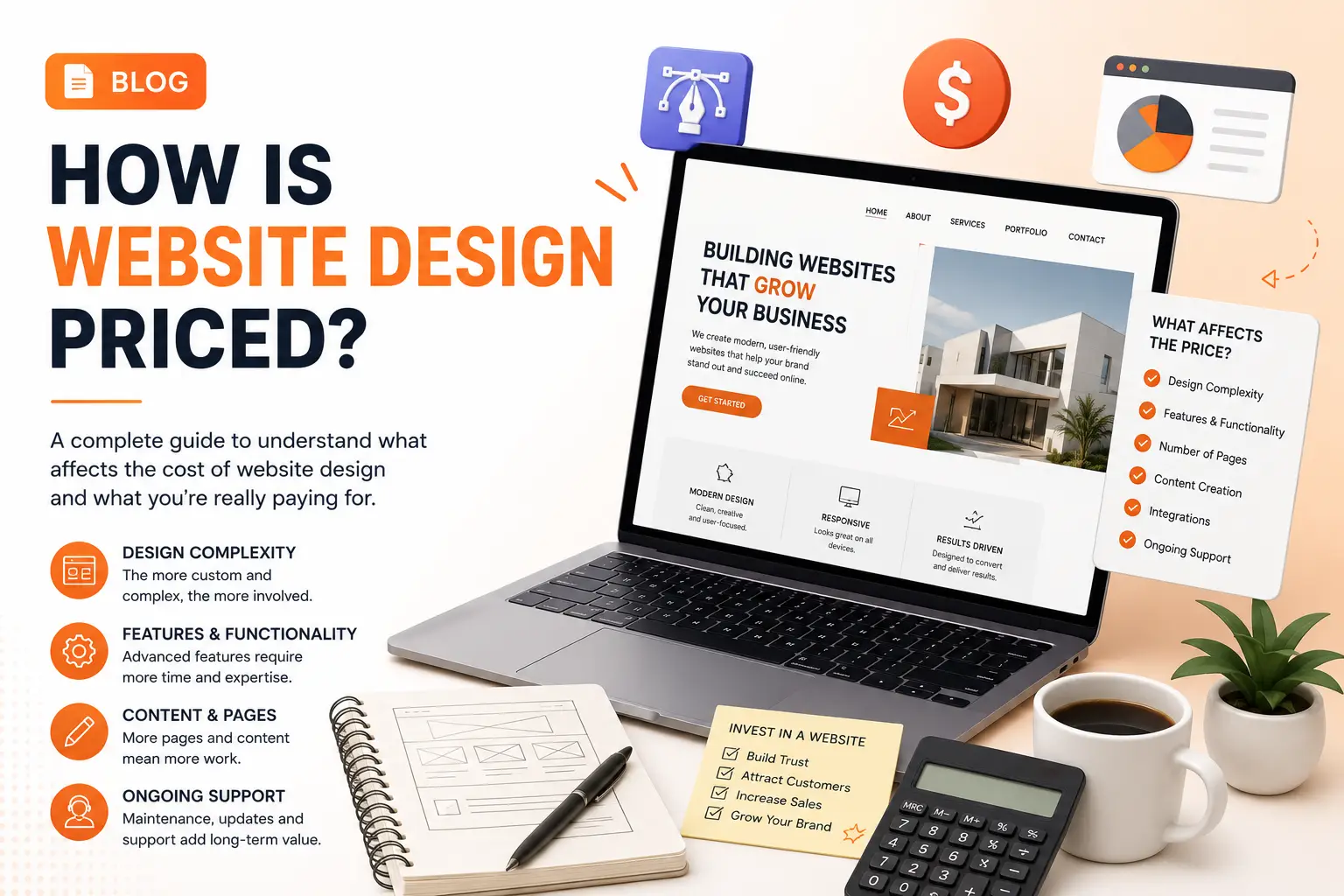
What You Are Actually Paying For
The single most useful thing to understand about web design cost in Singapore is that you are not paying for pages, you are paying for the thinking that makes the pages work.
Two studios can quote the same figure and hand you very different websites. One delivers a site structured around how your customers decide, with copy, speed and a clear path to enquiry built in. The other delivers a good-looking template that loads slowly, says little, and gives a visitor no reason to act. Same price, completely different value.
So look past the design mockups and ask what the site is built to do. A website that exists to be admired is a brochure; one that turns ad traffic and organic visitors into enquiries is an asset worth building properly. For businesses running paid campaigns, that conversion job is often concentrated in a single landing page design built for one action, a different discipline from a full site and worth pricing separately.
The Hidden Costs Quotes Leave Out
The build price is not the whole cost of owning a website, and the quotes that look cheapest are often the ones that hide the rest.
A website has running costs that continue after launch: hosting, a domain name, maintenance and updates, and any premium plugins or licences the site depends on. Each of these is a recurring line rather than a one-off, and together they set what the site costs you to own each year. A quote that leaves them out is not cheaper, it just defers the bill.
Then there are the costs that hide inside the scope. Copywriting is one: many quotes assume you will supply all the words, which is a large job most business owners underestimate. Photography and graphics are another. So is anything labelled “revisions”, which can be generous or capped at one round depending on the fine print. And the big one for anyone running ads is speed and mobile performance, which some builds treat as an afterthought and then charge to fix later.
Ask for every one of these in writing before you sign. A fair studio itemises what is included, what is extra, and what the site will cost to run each year. A quote that will not itemise is not a bargain at any price.
What Decides How Much You Need
No two businesses need the same website. These factors decide how big a job yours really is and how long the build takes, and they are exactly what a discovery conversation is for.
What the site has to do. A credibility site that mainly needs to exist is a smaller job than a site that has to convert paid traffic, sell products or take bookings. Function drives scope, and scope drives cost.
How many pages and how much custom design. More pages and more bespoke layouts mean more hours. A template adapted to your brand is a fraction of the work of a site designed page by page.
Whether you need ecommerce or integrations. A shop, a booking system or a link to your CRM adds real development work that a plain brochure site never touches.
Who supplies the content. If you have finished copy and images ready, the build moves faster and costs less. If the studio has to write and source them, that is real work and belongs in the quote.
How fast you need it live. A comfortable timeline lets the work be done properly, with structure, copy, revisions and testing happening in sequence rather than all at once. Compressing it usually means more hours in less time, which costs more, not less.
You cannot price a site honestly until someone understands what it has to achieve. A free growth audit is a straightforward way to begin that conversation.
Red Flags That Waste Your Budget
Plenty of website offers in Singapore look like a bargain and end up a letdown. Here is what to watch for.
A single price with no scope attached. If the quote is one number and nothing else, you are buying a mystery. Ask for the pages, the functionality and the inclusions in writing.
No running costs mentioned. A build price with silence on hosting, maintenance and licences is hiding part of the bill until after you have committed.
“Custom” that turns out to be a template. A custom price for a lightly edited theme is the most common overcharge in the market. Ask directly whether the design is bespoke or theme-based.
Speed and mobile treated as extras. For any business running ads, a slow, clumsy mobile site quietly wastes ad budget. If performance is not part of the build, that is a red flag, not a saving.
Vague ownership. You should own your site, your domain and your content outright. If the studio keeps you locked to their hosting or holds the keys, ask why before you sign.
Questions To Ask Before You Sign
Run these past any studio you are weighing up, ours included.
- What exactly is in this scope, page by page, and what counts as extra? Ask for it in writing.
- What will the site cost me to run each year after launch? Hosting, maintenance and licences, named.
- Is the design custom or template-based, and who writes the copy? These two answers explain most of the price gap between quotes.
- How is speed and mobile performance handled, and will the site be built to convert, not just to look good? For anyone running ads this is the whole point.
Specific answers usually mean a specific quote behind them. Woolly ones mean the opposite, and no discount fixes that.
Get The Scope In Writing, Not A Sales Pitch
We built this guide because website pricing in Singapore should not be a mystery. Whichever studio you choose, insist on a quote that itemises the scope page by page, names the annual running costs, and says plainly whether the site is built to convert or just to look good. If you would rather talk it through with us, our web design and development Singapore team will look at what your site needs to do and give you an honest read on what it would take, with no obligation to sign anything.
FAQs
It depends on which band you need. A template starter site, a custom SME site and a larger custom or ecommerce build sit at very different price points, because each involves a different amount of custom design and development. The number only means something next to the scope it buys, which is why an honest quote follows a conversation about what your site has to do.
Because "a website" is not one product. One quote may be a template with your logo dropped in, another a site designed page by page around how your customers decide. They can carry the same brief and deliver completely different value, so always compare scope and inclusions, not just the headline figure.
Hosting, a domain name, maintenance and updates, and any premium plugins or licences the site relies on. These are recurring costs rather than one-offs, and together they make up what the site costs to run each year. A quote that ignores them is not cheaper, it just sends the bill later. Ask for the annual running cost up front.
A starter site can be quick, while a custom SME build takes longer to do properly, and an ecommerce or heavily custom site longer still. The timeline scales with the same things that drive the cost: page count, how much is custom, and whether there is a shop or integrations to build. Content readiness is the biggest variable: a project moves faster when the copy and images are ready to go.